
Sunday Awe
Sunday Awe
Two weeks ago, we began a new spring seasonal theme of Renewal and Growth. We explored living in alignment with purpose and planting seeds of new ideas and visions. However, there is often an undercurrent that sabotages our progress. While we may make strides toward one goal, we may inadvertently harm another or compromise our health. This is not an external obstacle, but an internal one. If we are to flourish, we must address it.
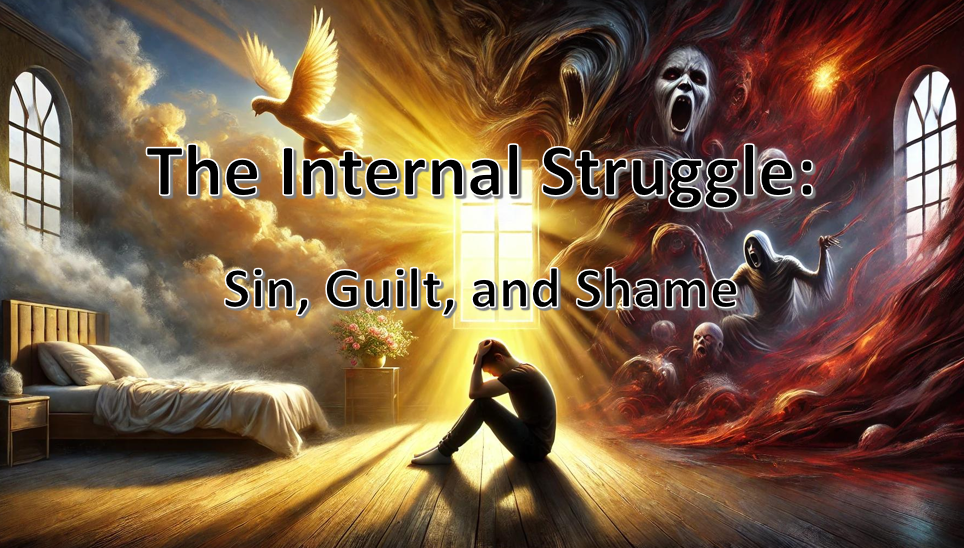
I know that the word “sin” can be triggering for some due to their religious experiences. However, at its core, sin represents the broken state in which humanity finds itself. The Greek word for sin simply means “missing the mark,” and we all do this. Our true nature is pure and holy, created in the image of God, but sin has derailed us from living up to our divine potential.
Sin begins in the heart, manifesting in our thoughts and intentions that precede our actions. It is a turning away from love, an acting out of fear, pride, greed, or self-protection. It occurs when we withhold forgiveness, judge one another harshly, or fail to act in love toward someone in need. The problem with sin is not that it breaks a divine rule, but rather that it fractures relationships—within ourselves, with others, and with God. Sin also has two offspring: guilt and shame.
Guilt can serve as a helpful signpost; it indicates that we have acted in a way that is not aligned with our deepest values or with the Spirit of love. Healthy guilt draws us toward humility, repentance, reconciliation, and change. Repentance is another heavily laden religious term, but it simply means to change one’s mind and direction. Guilt is inherently redemptive, and through confession, it can lead us to forgiveness and renewal.
Shame, on the other hand, is more corrosive. While guilt says, “I did something wrong,” shame says, “There is something wrong with me.” It attacks our identity, convincing us that we are unlovable, irredeemable, or unworthy. Shame humiliates us and keeps us stuck, preventing any lasting transformation. It steals, kills, and destroys, and it is not from God.
The way of God is one of restoration with dignity, not humiliation. When Jesus encounters the woman caught in adultery, he offers forgiveness without condemnation. After Peter denies him, he restores him with love, not shame.
Much of what we call “sin” emerges from parts of ourselves that we don’t fully understand or acknowledge. We often act out of unhealed wounds, unconscious fears, or unmet needs. This brings us to the concept of the shadow self—those aspects of ourselves we have repressed, rejected, or hidden. Our shadow often drives sinful behavior, not because it is evil, but because it is unexamined.
The shadow is not the same as sin, but they are deeply connected. Often, our sin reveals where our shadow is active—where we are not yet conscious, healed, or integrated. The shadow serves as the soil from which many of our internal struggles grow. However, like all soil, it can also be fertile ground for transformation—if we are willing to look.
Next week, we will explore the shadow more fully and discuss how the light of God can help us confront it—not to be shamed by it, but to be made whole.
Monday Awe: The Internal Struggle
Monday Awe: The Internal Struggle
- St. Augustine: “I was in love with ruin, in love with decay… my soul was sick and I longed to be whole.” (Confessions)
- Evagrius Ponticus: “Recognize the thoughts that disturb you, and name them; thus begins the path to healing.”
- Henri Nouwen: “Self-rejection is the greatest enemy of the spiritual life.” (Life of the Beloved)
- Rainer Maria Rilke: “You must give birth to your pain… then you will not be consumed by it.” (Letters to a Young Poet)
- Aleksandr Solzhenitsyn: “The line dividing good and evil cuts through the heart of every human being.” (The Gulag Archipelago)
- Romans 7:15: “I do not understand what I do. For what I want to do I do not do, but what I hate I do.” (NIV)
Question to Ponder: Where do you notice inner tension between who you are and who you want to be?
Action to Take: Write down a struggle you are carrying and offer it to God in prayer, without judgment.
Tuesday Awe: Acknowledging Sin
Tuesday Awe: Acknowledging Sin
- St. Augustine: “My sin was all the more incurable because I did not see it.” (Confessions)
- St. John Climacus: “The first step in repentance is the realization of our faults.” (The Ladder of Divine Ascent)
- Meister Eckhart: “Sin is estrangement from God; grace is the path home.” (Sermons and Treatises)
- Rabindranath Tagore: “Man sins in ignorance, but love leads him to wisdom.” (Gitanjali)
- Bhagavad Gita 9:30: “Even if the most sinful worship Me with unwavering faith, they are to be considered righteous.”
- Romans 3:23: “For all have sinned and fall short of the glory of God.” (NIV)
Question to Ponder: How does recognizing sin in your life open the way for grace?
Action to Take: Reflect on one area where you’ve fallen short and receive God’s forgiveness.
Wednesday Awe: The Gift of Guilt
Wednesday Awe: The Gift of Guilt
- St. John Chrysostom: “Guilt is the burden that weighs upon the soul until laid at the feet of Christ.” (Homilies on Matthew)
- Thomas Merton: “The greatest sins are not those we commit, but those we ignore.” (New Seeds of Contemplation)
- Simone Weil: “Guilt opens the heart to grace when it is met with humility.” (Gravity and Grace)
- Rumi: “Don’t carry guilt as a burden; let it be a teacher, guiding you back to love.” (The Essential Rumi)
- The Upanishads 1.4.10: “The soul weighed by guilt is released when it turns toward the light.”
- 1 John 1:9: “If we confess our sins, he is faithful and just and will forgive us our sins and purify us from all unrighteousness.” (NIV)
Question to Ponder: How can you release the guilt that holds you back?
Action to Take: Reflect on one of these quotes that speaks to you and open your heart to its application.
Thursday Awe: Wrestling with Shame
Thursday Awe: Wrestling with Shame
- James Finley: “Shame is the veil that covers the face of mercy.”
- Brené Brown: “Shame corrodes the very part of us that believes we are capable of change.” (Daring Greatly)
- St. Gregory the Great: “Shame is the wound that reminds us of our need for grace.” (Moralia in Job)
- Henri Nouwen: “Shame can cripple, but God’s embrace restores.” (The Return of the Prodigal Son)
- Tagore: “God’s love calls us out of hiding, as the shame of the heart is healed by the Beloved.” (Gitanjali)
- Isaiah 54:4: “Do not be afraid; you will not be put to shame… You will forget the shame of your youth.” (NIV)
Question to Ponder: What part of yourself are you hiding that needs to be seen with compassion?
Action to Take: Write a note to yourself as if you were writing to someone you deeply love.
Friday Awe: The Power of Repentance
Friday Awe: The Power of Repentance
- St. John of Damascus: “Repentance is the return to the life we lost.” (Exposition of the Orthodox Faith)
- St. Isaac the Syrian: “Tears of repentance are the sweetest fruit of the soul.” (Ascetical Homilies)
- Dietrich Bonhoeffer: “True repentance involves not just a change of heart, but a change of direction.” (The Cost of Discipleship)
- Rumi: “Don’t despair in your repentance; the door to God is always open.” (The Essential Rumi)
- Rig Veda 7.86.3: “The soul that turns to truth finds freedom from its errors.”
- Acts 3:19: “Repent, then, and turn to God, so that your sins may be wiped out, that times of refreshing may come from the Lord.” (NIV)
Question to Ponder: How does repentance bring refreshment to your soul?
Action to Take: Reflect on one way you can change direction today toward God.
Saturday Awe: Sin, Guilt and Shame
Saturday Awe: Sin, Guilt and Shame
- St. John of Damascus: “Repentance is the return to the life we lost.” (Exposition of the Orthodox Faith)
- St. John Climacus: “The first step in repentance is the realization of our faults.” (The Ladder of Divine Ascent)
- Rumi: “Don’t carry guilt as a burden; let it be a teacher, guiding you back to love.” (The Essential Rumi)
- Brené Brown: “Shame corrodes the very part of us that believes we are capable of change.” (Daring Greatly)
- St. John of Damascus: “Repentance is the return to the life we lost.” (Exposition of the Orthodox Faith)
- Romans 7:15: “I do not understand what I do. For what I want to do I do not do, but what I hate I do.” (NIV)
Question to Ponder: How is admitting guilt freeing?
Action to Take: Reflect on what might be next steps in dealing with sin, guilt or shame.